
Exploring Natural Wonders of Sandwich Harbour
Sandwich Harbour stands as a remarkable site where history and nature intertwine along Namibia’s rugged coastline. This unique area has witnessed centuries of human activity, from early explorers to whale hunters, and now serves as a sanctuary for diverse wildlife. Its surroundings, including the Namib Desert and the Skeleton Coast, add layers of geological and ecological significance that attract visitors and researchers alike.

A Historical Overview of Sandwich Harbour
The story of Sandwich Harbour begins in 1486 when Portuguese explorers claimed parts of this coast as their territory. This early European interest marked the beginning of a long history of human interaction with the area. By 1788, whale hunters had arrived, using the harbour as a safe shelter from the often violent seas. These hunters not only sought whales but also traded with the local communities, creating a dynamic coastal economy.
Whale hunting eventually ended, but the area’s economic importance did not. Rich deposits of guano, the accumulated droppings of seabirds, were discovered. This resource sparked a new industry, as guano was highly valued as fertilizer. The extraction of guano continued for many years, shaping the local economy and environment.
In 1979, Sandwich Harbour gained international recognition when it was registered under the Ramsar Convention as a wetland of international importance. This status highlights its critical role in supporting biodiversity and protecting fragile ecosystems.
The Namib Desert and Its Unique Landscape
Surrounding Sandwich Harbour is the Namib Desert, often called the oldest desert on Earth. It has existed for at least 55 million years, making it a geological marvel. The desert’s sand sea is a UNESCO World Heritage Site, recognized for its vast dunes and unique ecosystem.
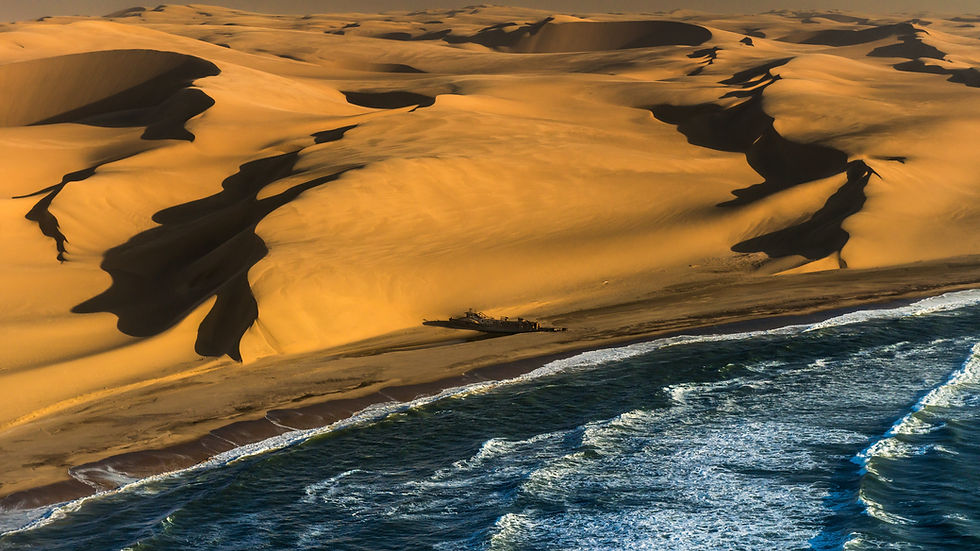
The dunes near Sandwich Harbour display striking colors, ranging from deep reds to golden yellows. These colors come from the minerals present in the sand, which have been shaped by wind and time. The dunes not only create a stunning visual but also provide habitats for specialized plants and animals adapted to this harsh environment.
The Skeleton Coast and Its Maritime Legacy
The nearby Skeleton Coast earned its name from the many shipwrecks that litter its shores. These wrecks tell stories of perilous navigation and the harsh conditions sailors faced. The coast’s treacherous waters and foggy weather made it a dangerous place for ships, leaving behind a haunting reminder of maritime history.
Despite its name, the Skeleton Coast is rich in wildlife and natural beauty. It forms part of the larger ecosystem that includes Sandwich Harbour and the Namib Desert, creating a diverse and interconnected environment.
Wildlife to Discover Around Sandwich Harbour
The area around Sandwich Harbour is home to a variety of animal species, many of which are adapted to the desert and coastal conditions. Birdwatchers and nature lovers will find the region especially rewarding.
Greater Flamingo: These elegant birds gather in the shallow waters, their pink feathers contrasting with the blue sea.
Lesser Flamingo: Smaller than their greater
cousins, they also frequent the wetlands and salt pans.
Pelicans: Often seen gliding over the water or resting along the shore.
Ostrich: Though rarely seen, ostriches inhabit the desert edges and are the largest birds in the world.
Seals: The coastline supports colonies of seals, which can be spotted basking on rocks or swimming near the shore.
Gemsbok / Oryx: These striking antelopes roam the desert plains, known for their long, straight horns.
Springbok: A common sight, these graceful antelopes are well adapted to the arid environment.
Black-Backed Jackal: This cunning predator plays a key role in the local food chain.
These animals contribute to the ecological richness of the region and offer excellent opportunities for wildlife observation.
Visiting Sandwich Harbour and Its Surroundings
Travelers interested in exploring Sandwich Harbour should plan for a journey that combines history, nature, and adventure. The area is accessible from nearby towns such as Walvis Bay, where guided tours often begin.
Visitors can expect:
Scenic drives across the Namib Desert dunes
Boat trips to see seals and birdlife along the coast
Opportunities for photography of the dramatic landscapes and wildlife
Learning about the historical significance of the harbour and its role in local culture
Respect for the environment is crucial, as the area is protected and fragile. Visitors should follow guidelines to minimize their impact and help preserve this unique place for future generations.

Final Thoughts on Sandwich Harbour’s Importance
Sandwich Harbour and its surroundings offer a rare glimpse into a place where history, geology, and wildlife come together. From early explorers and whale hunters to the present-day conservation efforts, the area reflects a deep connection between people and nature.


